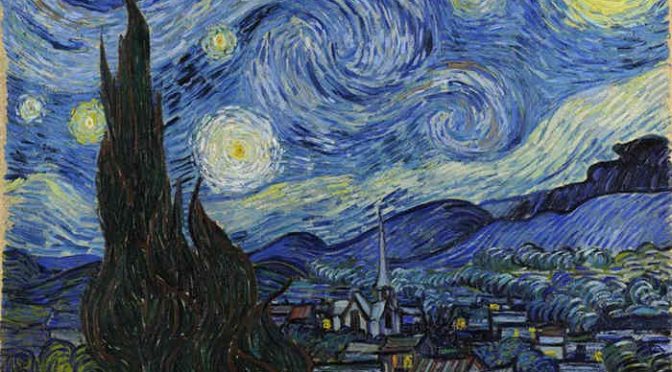
Texture in art can be broken into two categories of either Real Texture and Visual or Implied Texture. Real Texture is defined as an objects feeling by touch where it feels just as it appears it should.
Composition in art is the sum of, the putting together, or the organization of art by its elements. Due to this the principle of Harmony plays a direct role in its influence to a Composition.
It is not the subject of the artwork, its theme, nor entirely its overall message.
Traditional Japanese art came from a long and progressive time line through many people. Before Japan came to be what it is today, one can look to three key periods of history.
Figure Painting is defined as fine art where the human form is the primary subject of the art. It typically falls into several categories.
It can be a portrait but also imaginary, mythical, or historical. Works can also be done as an allegory. This art is most commonly done in a single point perspective.
Rhythm In Art is unique for what it provides. While it is a principle in its own right, a more proper definition for rhythm is found in the purpose of creating flow within the art content.
Shou Sugi Ban is essentially a form or style of Japanese wood burning. While commonly done with Cedar this method can be applied to any kind of lumber.
Its goal is to create a unique and beautiful looking wood for the use in a home as an aesthetic accent.
Natural Wood comes from the world around us in an organic state. There are differences as to what would qualify aside from separating natural from other wood that is synthetic.
Of these differences includes farm grown when compared to wood taken from the wild.
Forest Art is a naturalist depiction which can be stylized or realistic in a work of art. This theme has been used for centuries by artists reaching back across time.
The significance behind this theme has led to the recognition of great naturalist artists of history.
Movement in art is the path, flow, or suggestion of movement which causes the eyes to follow in an intended direction. It utilizes shapes, color, line, and arrangement in space to create the illusion, implication (juxtaposition) of, or visual queue alluding to motion.