
What Is Whittling?
Whittling is the simple act of using a knife to carve small sections of wood from a piece of lumber. Traditionally we think of this as a knife being used on a stick. Yet other kinds of carving can also be called whittling.
Whittling can be defined as a verb. It is the act of carving with a knife. It can also act as a noun to describe the person who whittles or the kind of art they create.
Beyond this are the mindsets which surround whittling. A purist believes that only a pocket knife can be used for this process.
Alternatively those who are more focused on wood carving accept whittling as merely a process within a broader scope of shaping wood. Here any knife design is acceptable at performing this function.
I will add that there is a close relationship between the concepts of whittling and chip carving. While two different functions, they can both be used with the same tools and on the same wood piece.
Where Did Whittling Come From?
If you read many of the stories online about Whittling you will discover different claims as to where it came from. One site has the state of Arkansas laying claim. Another gives its rise in popularity to the Civil War.
Make no mistake that people are passionate about their claims. This folk art has become an impassioned battle ground for those who love it.

The truth is we do not know its specific origins. The greater point is that the act of whittling has been with us since mankind began to shape tools from wood.
Every society within the world has this concept within its history, albeit by alternate names. The word whittling within English in its etymology has Old English, Germanic, and Norse roots.
As to who wins the battle of defining where whittling came from, I will leave that effort to them. A broader study of woodworking I am sure will show that no one region can lay claim.
Where Did Whittling As An Art Evolve From?
The art form of Whittling most likely had the same origins as other woodworking. It was by necessity through a natural evolution within every society of the world.
Yet within North America its origins can be traced to early woodworking with those who came to the New World. It could be found within every facet and class of society.
Whittling gave people not only the first tools, but also the first toys and decorative pieces. It would be later that this art form would be more specific to a people or region.
With time this idea became a folk art among several sets or groups. While Arkansas can attempt to lay claim to this, so can the people of Appalachia, and some still practice it today.
It is true that by the mid 1800s within North America that Whittling came to be commonly found among many people. Whether it was used as a pass time or as an art, it spread to be within all parts and portions of society.
By the mid 1900s whittling was taught within the Boy Scouts where it gained further exposure. With the climax of woodworking in the 1970s, related associations gained broad memberships and here it may have reached its peak.
Today whittling still exists as a popular form of woodworking. It is easy to perform and is inexpensive to get started in.
The Whittling Knife
Throughout the centuries it has been common for whittling to be performed with only a knife. You will find great variation of this today in using many alternate types of knives.
Traditionally this was done with the common pocket knife. Today if you look for whittling tools you will find sets of carving knives. Yet the purists still believe and use only a pocket knife.

If you wish to use the pocket knife then you still need the right selection. Those such as Case which make multiple folding blades in one knife are the better option.
If you search online, the whittling knife sets you will see typically have the equivalent of a Sloyd knife.
You will also find a 1in to 1 ½in detail knife. Some wood carving kits have a hook knife which is common for things like spoon making.
In our modern time, Whittling has become an art which is defined by knife carving irrespective of the kind of knife that is used. Having said this the use of chisels or other carving implements would be excluded from this art.
The knives can be had rather inexpensively. The blades are thin as they are designed for removing small amounts of material with shallow cuts.
While Whittling knives can be easily maintained and sharpened, they are not made to last a lifetime. In this way they are more disposable but can serve you for a good deal of time.
Which Whittling Knife Is Better?
I have given a detailed article on carving knives. I would refer you to this article for more detail on what is better to find in a whittling knife.

I really do not believe that one brand of whittling knife is better over another. Rather what is better for you will often be determined by the ergonomics of the knife handle.
What makes a good blade is more related to how well it fits in your hand and the control that gives you. To discover which is best may require some experimentation as to what you like.
If you want better steel then you may wish to look into Japanese versions of these knives. Know that you are stepping into a whole other world for their care and sharpening process.
If you do decide to go the Japanese route be sure this is for you. It is not commonly where beginners start.
Tips For Beginners In Whittling
1. The first obvious tip should be to keep you knife sharp. This is actually essential. I will say that typically people do not sharpen their knives enough for they still think it is sharp.
If I may make a comparison, when using wood chisels often carvers will sharpen the edge while it is still sharp. This should also be the practice within whittling.
More problems and accidents can occur from a dulling blade than you would expect. Likewise the quality of the carving will suffer.
If you wait until your blade is dull before you sharpen it, then you have waited too long.
2. Wear a glove as a beginner. There are cut resistant gloves that can be had inexpensively. If you do not like a glove then at least use a thumb pad.
Slips do happen and you will need to protect your hands and fingers. Please do not overlook this especially as a beginner.
Another way to protect yourself is with a woodworking apron. On pull cuts a good apron can act as a bit of armor putting more material between you and the sharp edge.
3. Make thin and shallow cuts when starting. Whittling is more about shaping the wood. You are not trying to split it in half.
Deep cuts never go well. You will either harm yourself, damage the wood, or break your blade in doing this. When whittling you merely are removing thinner layers of material a little at a time.
4. It is best to cut with the grain of the wood. It is understandable that this is not always possible. Yet typically it is something that can be controlled.
The ease at which the blade will work through the material, and the quality of the surface it leaves behind, is far better working with the natural grain direction.
5. Use light pressure when cutting. If you find yourself pushing or pulling too hard then something is wrong.
Applying too much pressure can be attributed to either a dull blade or cutting too deeply. Another cause can be a cut against the grain where fibers are tearing rather than being cut.
No whittling cut should ever be forced with any amount of power or struggle. The art is about control and fine details.
What Kind Of Wood Is Best For Whittling?
For beginners I would suggest Basswood or Balsa to learn whittling. Many expert carvers still prefer these two wood types.
The reason why these are often a preferred wood species is due to the ease of shaping. The wood is not dense therefor it can be more readily manipulated.
Contours are easier to shape and details in carving can be made. These two species also aid in protecting you for there should never be any difficulty in any cut you choose to make.
Softwoods are commonly what is preferred to be used when whittling. Yet not all are equal and I prefer some hardwoods over soft.

Personally I prefer softer Maple when compared to Pine. While pine is a common suggestion, the wood density is not consistent, it has too much pitch to my liking, and is generally ugly in appearance.
White Pine is nearly as dense as Maple. Yellow Pine is softer than white. Species, the location within which it was grown, and its growth age can all impact this.
Maple, while a “hardwood”, is still soft enough to manipulate with ease. This is in part due to greater consistency found within its density and grain structure.
Cedar is another popular “hardwood” some prefer. I dislike using cedar for this due to how quickly the density changes from heartwood to its outer layers.
Nevertheless Cedar and White Pine are closely related in terms of rated density. I will admit though choosing between these two… you just have to love Cedar.
I bring these points up to show how everyone will have their opinions. You will discover what you like or dislike with experimentation.
Nevertheless if you are new to whittling then please start with Basswood or Balsa. Do not jump directly to these other wood species without first practicing on softer and less dense wood.
Where Does Whittling Fit Into Wood Carving?
Whittling is wood carving, but only with knives. Wood carving is a broader form of shaping wood which includes many other tools such as wood chisels.
While whittling has often been considered as a pass time, it is within its own right an art form. There are many diverse works of art that have been made by many.
Typically the creations by these people are smaller and can be held within your hand. Here is the only limitation which whittling has.
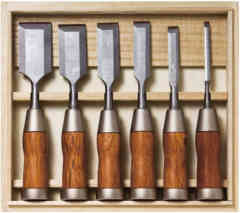
The scale and scope of the work will be limited by the blade. Moving beyond what the whittling knife is capable of performing then requires other tools to perform that carving task.
Some artists have used lathes to rough in a piece of lumber. Once this is complete they then use whittling to add the art or carving.
Indeed with purists this is considered cheating. Nevertheless it shows the potential that one has when combining multiple processes.
What this would allow is more intricate work to be added to items such as bowls and wood sculptures. There really are no limits as to what can be created.
In truth, today whittling is a skill set within a much broader category of wood carving. While it is capable of standing alone, it is best used when in compliment of other processes.
How Much Does It Cost To Get Started?
Getting started in whittling can cost as little as a Case pocket knife and the piece of wood. How far you decide to take it is an altogether different story.
I would suggest one of the common knife sets found in places like Woodcraft or their competitors. Here you can get started with multiple blades for around 50 dollars.
Knife sets of the Japanese variety can cost much more money. How much more depends on the authenticity of the forging. Along with this will also be the needed sharpening tools for those blades.
Here you can spend near 500 dollars with ease if you choose to get better tools and supporting systems. Yet comparatively speaking to other tools used in woodworking, this is still inexpensive.
As you can see there is a very wide field of options that you can select from. No one is really better than the other. It comes down to what you prefer to use.